



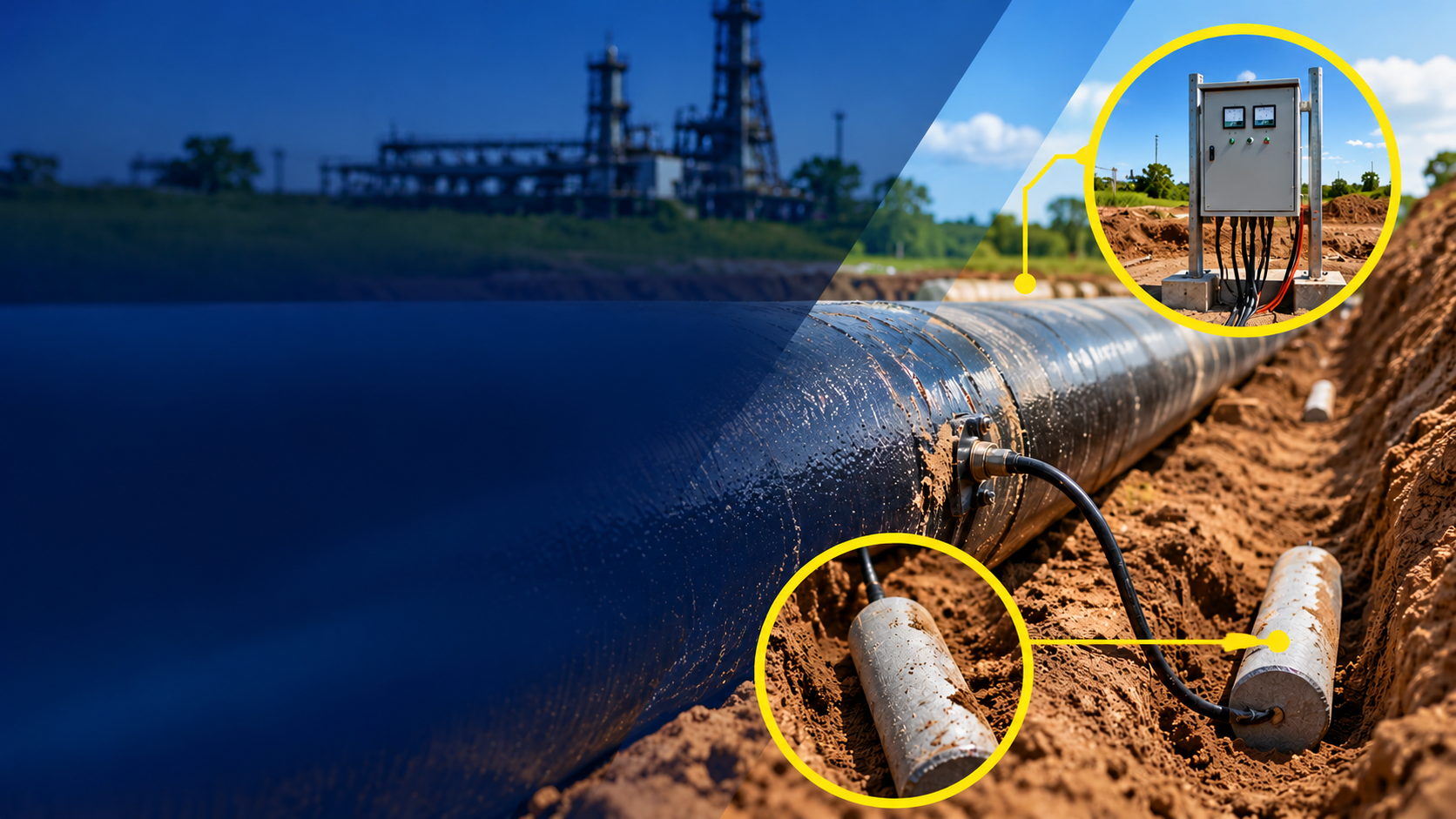
Pipeline corrosion can lead to leaks, expensive repairs, unplanned shutdowns and environmental risks. For buried and submerged steel pipelines, the challenge is that corrosion can develop out of sight, making early detection difficult.
One important method of managing this risk is cathodic protection (CP). But how does it work, and how can operators tell whether their systems are providing adequate protection?
What Is Cathodic Protection?
Cathodic protection is an electrochemical technique that reduces the tendency of steel to corrode by making it the cathode of an electrochemical cell.
In simple terms, it supplies protective current to the pipeline, helping reduce metal loss at vulnerable areas where the external coating may be damaged.
Why Do Coated Pipelines Still Need Cathodic Protection?
Pipeline coatings provide a barrier between steel and its surrounding environment. However, coatings can be damaged during transportation, installation or operation.
When moisture and other corrosive elements reach exposed steel, corrosion can begin. Cathodic protection provides an additional layer of defence at these vulnerable points.
The Two Main Types of Cathodic Protection
1. Sacrificial Anode System

Cathwell.
This system connects the pipeline to a more reactive metal, commonly magnesium or zinc in suitable applications. The anode corrodes preferentially, supplying electrons that help protect the pipeline.
- Does not require an external power supply.
- Can suit applications with relatively low protective-current requirements.
- Anodes are gradually consumed and must be monitored.
2. Impressed Current Cathodic Protection (ICCP)
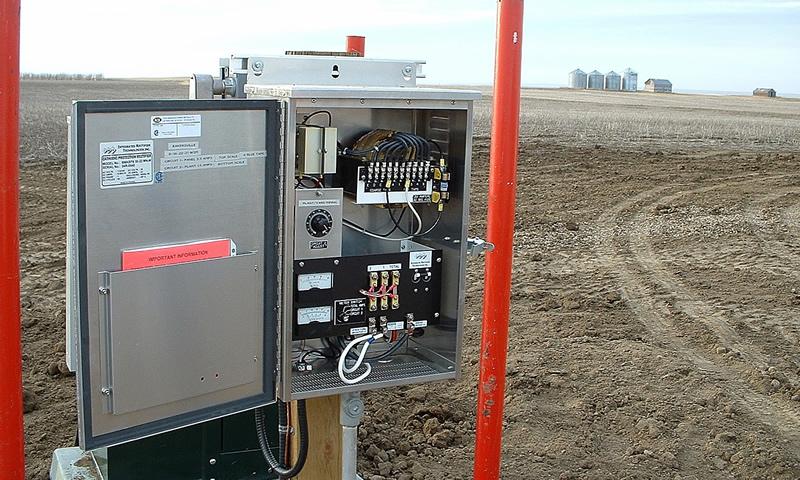
This system uses an external direct-current power source, usually a rectifier, to supply protective current through an anode system. It can suit pipelines with higher current requirements but needs appropriate electrical equipment, monitoring and maintenance.
The right choice depends on pipeline length, coating condition, environmental conditions, current demand and the engineering design.
How Can You Tell If a System Is Failing?
A cathodic protection system may underperform without any visible signs of pipeline damage. Watch for these warning signs:
- Pipeline-to-soil potential readings that do not meet applicable protection criteria.
- Rectifier failure or abnormal electrical output.
- Damaged cables, loose connections or deteriorated anodes.
- Electrical interference affecting system performance.
- Evidence of coating deterioration or corrosion during surveys.
A working rectifier alone does not prove that the entire pipeline is adequately protected. Appropriate measurements and inspections are necessary to verify performance.
How Often Should Cathodic Protection Be Inspected?
Inspection frequency depends on applicable regulations, pipeline design, operating environment and the corrosion-control programme.
Monitoring may include electrical potential measurements, rectifier checks, anode inspections, coating assessments and specialised surveys. Abnormal results should be investigated, documented and followed by corrective action.
Operators in Nigeria should follow applicable Nigerian regulatory requirements, engineering standards and project specifications rather than automatically adopting inspection intervals from another jurisdiction.
Can Cathodic Protection Prevent All Pipeline Corrosion?
No. Cathodic protection primarily addresses external corrosion under suitable conditions. It does not eliminate every corrosion mechanism and is not a substitute for managing internal corrosion caused by the fluids transported through the pipeline.
An effective integrity programme combines suitable coatings, cathodic protection, inspections, monitoring and timely maintenance.
Frequently Asked Questions
Does cathodic protection stop corrosion completely?
It reduces the risk of external corrosion when properly designed and maintained, but does not guarantee that every corrosion mechanism will stop.
Does a working rectifier mean the pipeline is protected?
No. System operation must be verified through appropriate measurements and inspections.
Does cathodic protection eliminate the need for pipeline inspections?
No. It is one part of pipeline integrity management and does not replace coating assessments, corrosion surveys or other necessary inspections.
Protecting Pipeline Integrity Requires a Proactive Approach
Cathodic protection is an important defence against external corrosion in buried and submerged steel pipelines. Its effectiveness depends on proper design, installation, monitoring and maintenance.
For oil and gas operators, identifying faults early and verifying system performance can help manage corrosion risks, reduce avoidable repairs and support pipeline integrity.
At OceanKlass Solutions Limited, we recognise the importance of proactive maintenance and sound engineering practices in supporting the reliability of oil and gas infrastructure.
Need Reliable Pipeline and Engineering Support?
Explore our engineering and pipeline-related services and learn how OceanKlass can support your project requirements.
Further Reading
Tags: Cathodic Protection, Pipeline Integrity, Corrosion Control, Oil and Gas, Pipeline Maintenance, Engineering, OceanKlass